CNC Machining Center Guide: Fixed-Column vs Trunnion Table
A fixed-column vertical machining center and a trunnion table machining center are both CNC machining centers, and both can hold tolerances in the micron range. The difference that decides a purchase is architectural rather than qualitative: which axes move, where the workpiece sits, how much usable envelope survives when the table rotates, and how much spindle torque and tool mass the structure is designed to carry.
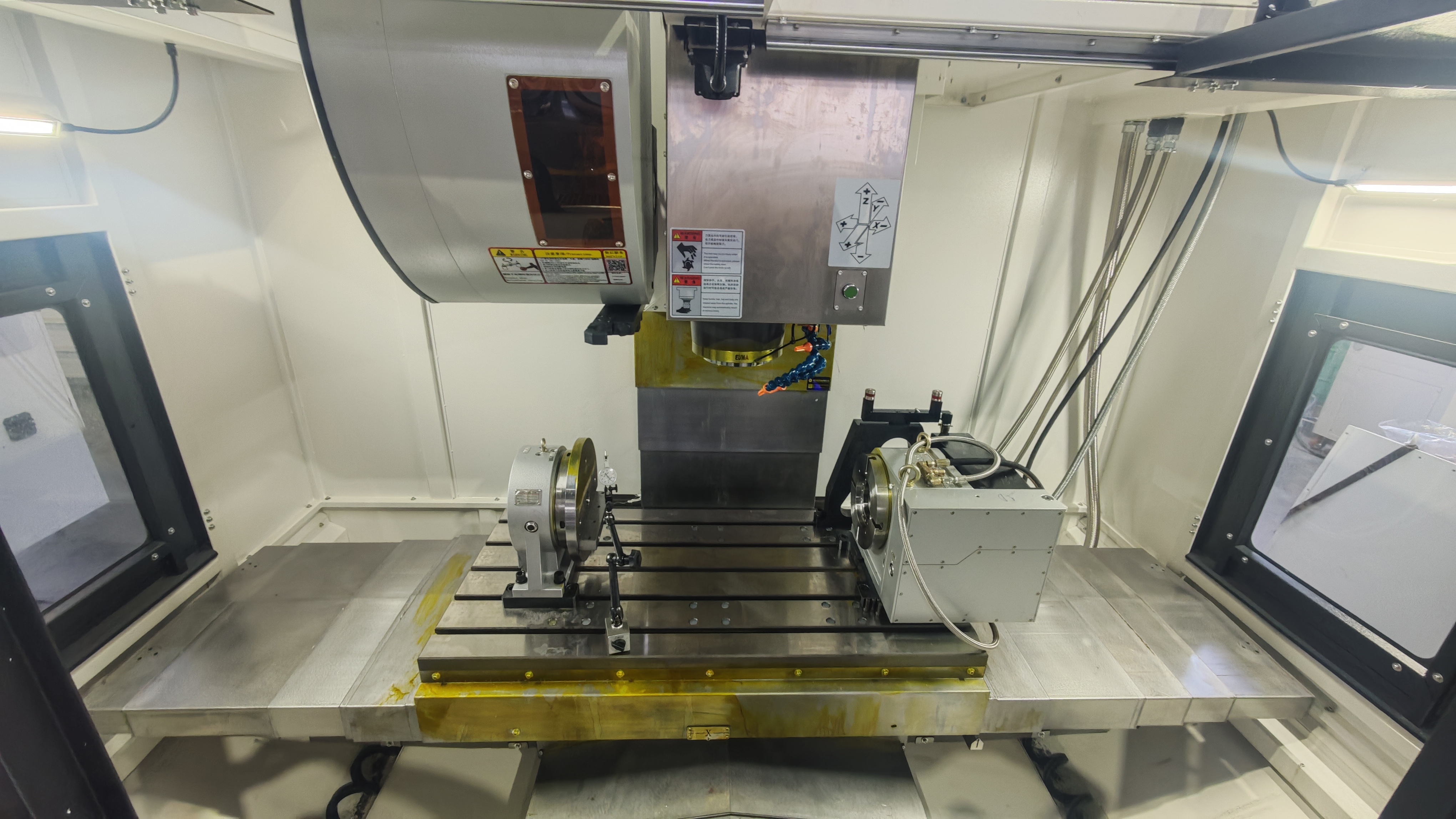
This guide compares the two architectures parameter by parameter. The fixed-column side is documented with the EUMASEIKI EV-1580B and the EV-1475B series it belongs to. The rotary-table side is represented by the UV260 trunnion table machining center and by the EUMASEIKI configurations whose parameter sheets are fully published, the DX5-630 gantry cradle five-axis machining center and the DU5-500 five-axis vertical machining center. Every figure quoted below comes from those datasheets; nothing is averaged, rounded or estimated.
Problem Definition: Three Ways the Comparison Goes Wrong
Most specification errors in this comparison come from three misreadings, and each one is visible on a datasheet.
Misreading one: treating machine type as a capability rank. A trunnion table machine is not a higher class of machine than a fixed-column vertical. The DU5-500, a five-axis vertical machining center with B and C axes, lists a maximum worktable load of 200 kg and X/Y/Z travel of 520/450/420 mm. The EV-1580B, a fixed-column vertical machining center, lists a 1600 x 800 mm table with a 1200 kg maximum load and X/Y/Z travel of 1500/800/700 mm. For a large mould base or a heavy plate, the fixed-column machine carries work the trunnion machine cannot physically hold.
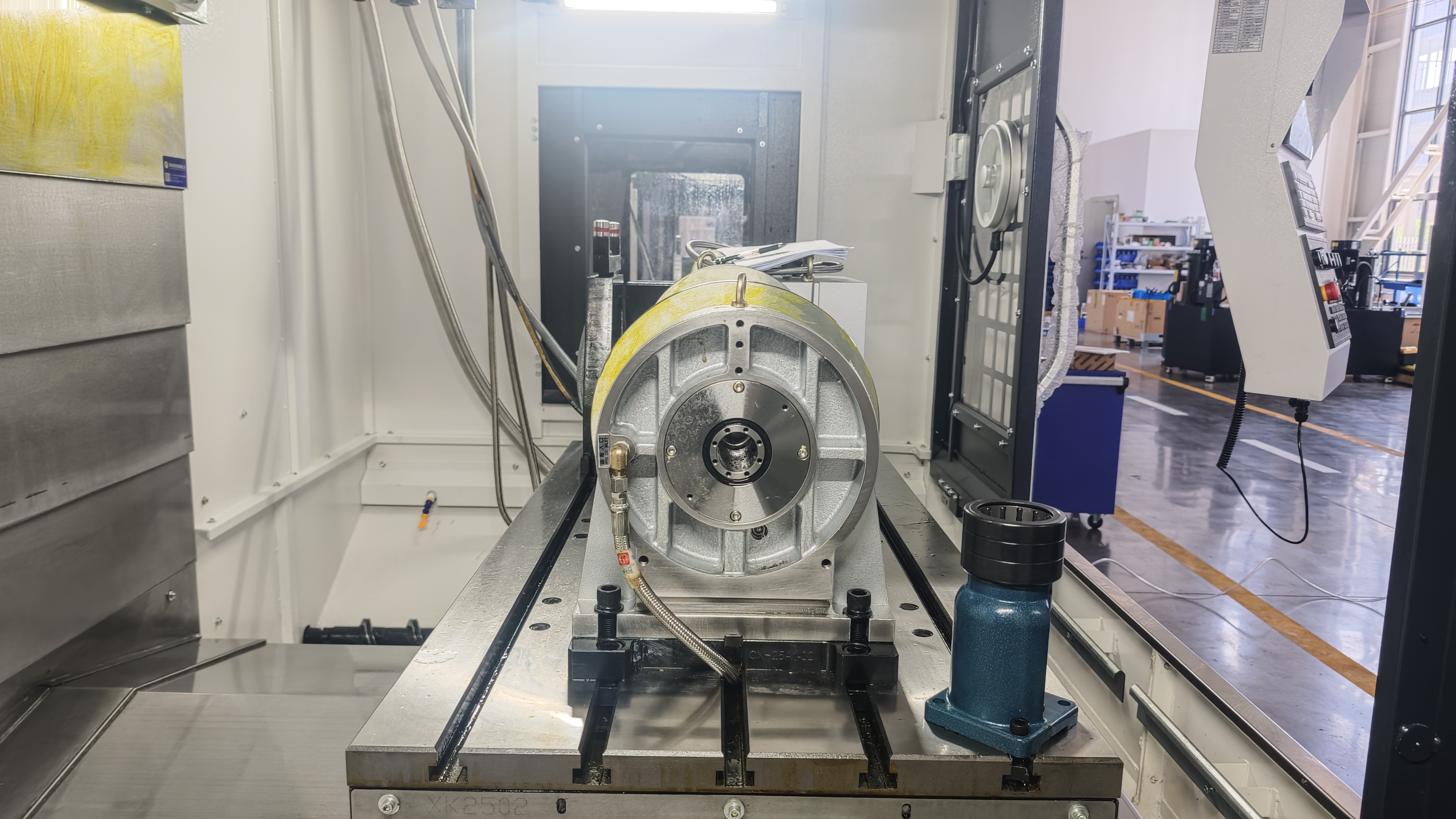
Misreading two: comparing axis count instead of usable envelope. A rotary table consumes envelope. As the table tilts, the part must clear the swing diameter, not just the table surface. The DX5-630 lists a maximum worktable swing diameter of 800 mm on a 630 mm table surface, with an 800 kg load limit and 120 to 620 mm spindle-nose-to-table distance. The EV-1580B provides 155 to 855 mm of spindle-nose-to-table distance and 855 mm from spindle centre to column. A part that fits the table but not the swing will not run on the trunnion machine at the angle the process requires.
Misreading three: comparing spindle speed without the taper. The EV-1580B runs an ISO 50 taper at 8000 rpm with a belt drive, 22/33 kW main motor power and 140/260 Nm torque (210/380 Nm in the higher configuration). The DU5-500 and DX5-630 both run HSK-A63 tooling, at 15000 rpm as standard and 20000 rpm as an electrical-spindle option. Higher rpm is not automatically better: ISO 50 carries larger, heavier cutters, while HSK-A63 suits smaller diameters at higher surface speeds.
Answer in one paragraph: choose the fixed-column architecture when the workpiece is large or heavy and the process is dominated by stable, high-torque cutting on a horizontal table plane; choose the trunnion table architecture when the part is small to medium, multi-faced, and the cost of extra setups exceeds the envelope you give up. The parameters that settle the question are X/Y/Z travel, table size and load, swing diameter, spindle taper and torque, tool weight limits, and rotary-axis accuracy.
Industry Background: Why the Parameter Sheets Keep Getting Longer
Global revenue for CNC machining and turning centers is reported at 31.3 billion US dollars for 2026 in a Grand View Research market report indexed by HTNXT Research in its 2026 CNC machining center data package. Within that market, buyers increasingly quote multi-face and five-axis configurations alongside conventional three-axis verticals, which is why a modern CNC machining center enquiry tends to arrive with a longer parameter checklist than it did a decade ago.
EUMASEIKI is the brand of Wenzhou Euma Machinery Co., Ltd., a China-based manufacturer that customises CNC machining centers. The company operates an 8,000 m² facility with 68 employees, 8 R&D engineers, and annual output of 50 to 100 units; 80% of output is exported, with Russia, Saudi Arabia, Indonesia and Iran listed as main markets. The production base is located in Ningbo City and is equipped with imported machine tools including Japanese OKUMA gantry machining centers, KURUKI boring and milling machines and NIIGATA horizontal machining centers, plus a German ZEISS coordinate measuring machine used for verification and trial machining.
On the design side, the company states that its machines originate from European design concepts and are manufactured to Taiwanese standards and Japanese technologies through casting, machining, assembly and commissioning. Machine beds use mineral castings with structures optimised through finite element analysis; all castings receive full annealing treatment to relieve internal stress; spindle guideways are high-frequency heat treated. Spindles, guideways, bearings and oil pumps are sourced from Taiwanese and Japanese manufacturers, and some core components are imported from original brands in Germany or Italy.
Detailed Solution: The Six Parameter Blocks That Decide the Fit
Block 1 — Work Envelope and Clearance
Start with X/Y/Z travel, then immediately check the two clearance figures. Travel alone tells you the swept volume; spindle-nose-to-table distance tells you how tall the fixturing stack can be, and spindle-centre-to-column distance tells you how far off centre a wide part can sit.
- EV-1580B (fixed-column vertical): X 1500 mm, Y 800 mm, Z 700 mm; spindle nose to worktable 155 to 855 mm; spindle centre to column 855 mm.
- DU5-500 (five-axis vertical with B/C axes): X 520 mm, Y 450 mm, Z 420 mm; spindle to worktable 150 to 570 mm.
- DX5-630 (gantry cradle five-axis): X/Y/Z 700/700/500 mm; spindle nose to worktable 120 to 620 mm.
On a trunnion machine, the clearance range also has to survive rotation: as the table tilts, the part sweeps a larger volume than its static footprint. On a fixed-column vertical, the clearance range is used mainly for fixture height and tool length.
Block 2 — Table Size, Load and T-Slots
Table load is the parameter that most often disqualifies a trunnion machine for work it otherwise seems suited to.
- EV-1580B: worktable 1600 x 800 mm, maximum load 1200 kg, T-slot 22 x 110 x 7 mm.
- DX5-630: table surface diameter 630 mm, maximum load 800 kg, maximum swing diameter 800 mm, T-slot 14H8 mm.
- DU5-500: table diameter 500 mm with a 540 x R480 mm maximum working space, maximum load 200 kg, T-slot 6-12H8 mm.
The practical rule: estimate finished part weight plus fixture weight plus a machining allowance, and compare that total against the load rating. A 200 kg rotary table rated machine is a light-part machine by design, not by limitation of its control.
Block 3 — Spindle Taper, Speed and Torque
Spindle taper determines the tooling ecosystem, and the tooling ecosystem determines what the rest of the machine can be asked to do.
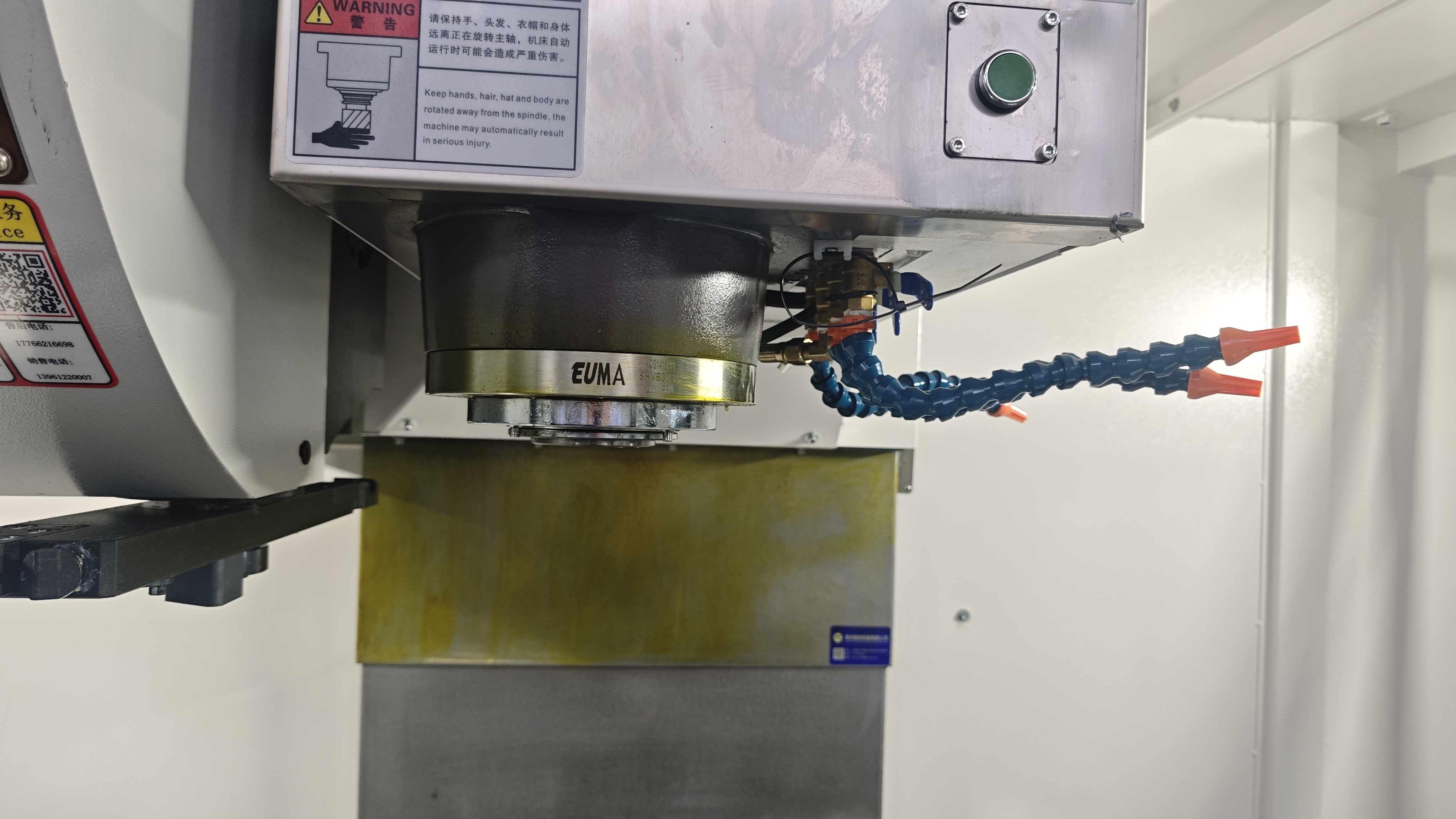
- EV-1580B: ISO 50 taper, belt drive, 8000 rpm, main motor 22/33 kW (S1/S6 25%), torque 140/260 Nm, or 210/380 Nm in the higher-torque configuration.
- DU5-500: HSK-A63; direct spindle at 15000 rpm with 16.8/23.5 kW and 53/100 Nm (alternative 18/25.2 kW and 82/118 Nm), or electrical spindle at 15000 rpm with 36/50 kW and 159/220 Nm, with a 20000 rpm option.
- DX5-630: HSK-A63; direct spindle 15000 rpm with 22/33 kW and 140/260 Nm, or electrical spindle 20000 rpm with 31/37 kW and 100/120 Nm.
Block 4 — Tool Magazine: Diameter, Length and Weight Before Count
Pocket count is the headline number; the size limits are the operative ones.
- EV-1580B: BT50, 24 pockets, arm-type change, 3 s tool-to-tool; maximum tool diameter 110 mm (220 mm non-adjacent), maximum length 350 mm, maximum weight 15 kg.
- DX5-630: 40 pockets, 5.0 s tool-to-tool; maximum tool diameter 75 mm (120 mm non-adjacent), length 300 mm, weight 8 kg.
- DU5-500: 32 pockets; maximum tool diameter 75 mm (150 mm non-adjacent), length 300 mm, weight 8 kg.
A rotary-table machine generally imposes tighter tool weight and diameter limits because the tool must clear the tilting part. If the process needs a 15 kg face mill or a 350 mm long boring bar, the ISO 50 fixed-column machine is the realistic host.
Block 5 — Control System and Rotary-Axis Content
The EV-1580B is supplied with the SIEMENS 828D control; the DX5-630 and DU5-500 are supplied with SIEMENS ONE, and the DU5-500 is also offered with SIEMENS. On fixed-column models in the range, FANUC controls also appear — the EV-855A lists FANUC OIMFPLUS. For multi-face work, the control model alone does not define capability: confirm that the ordered option list includes the simultaneous-motion and rotary-axis functions the process depends on.
The rotary axes themselves carry their own ratings. The DX5-630 specifies an A axis of plus or minus 120 degrees and a C axis of 360 degrees, with A/C speeds of 60/100 rpm and rated torque of 1290/600 Nm (maximum 2400/1100 Nm). The DU5-500 specifies B-axis swing of plus or minus 120 degrees and C-axis rotation of 360 degrees at 0.001 degree increments, with a rated torque of 335/106 Nm and a maximum of 1680/840 Nm. Those torque figures tell you how much off-centre mass the table can accelerate and hold without losing position.
Block 6 — Accuracy, Mass and Site Services
Accuracy must be read with its measurement basis. The EV-1580B lists X/Y/Z positioning accuracy of 0.009 mm and repeat positioning accuracy of 0.006 mm. The DU5-500 lists X/Y/Z positioning accuracy of 0.008 mm and repeat accuracy of 0.005 mm under VDI 3441 over full travel, with B/C-axis positioning of 10 arc seconds and repeatability of 4 arc seconds. The DX5-630 lists 0.008 mm positioning and 0.004 mm repeatability under VDI 3441, with A/C-axis positioning of 10 arc seconds and repeatability of 4 arc seconds.
Mass and services follow the same pattern. The EV-1580B weighs approximately 8000 kg with a 4000 x 3300 mm footprint and 3550 mm height, requires 35 kVA and 6.5 kg/cm² air pressure. The DU5-500 has a net weight of 6000 kg, a 2840 x 3000 mm footprint and 2900 mm height, requires 50 kVA and 5 to 8 kg/cm² air pressure, with a 4 bar coolant pump and a 180 L tank. The DX5-630 weighs 16000 kg, measures 5200 x 3300 x 3400 mm, and requires 60 kVA and 6 kg/cm² at 500 L/min air flow. Foundation, lifting and power provisioning should be checked against these figures before the order, not after delivery.
Rigidity and Thermal Stability: What the Construction Facts Mean
EUMASEIKI describes the EV-1580B as being built on two stationary castings, the base and the column, both combined with marble mineral materials. A secondary annealing process with a longer holding period is applied to further relieve stress and support a long service life. The listed materials for the model are high-precision electronic components, special steel, cast iron and marble. Core components such as the spindle, ball screw and guideway are sourced from mainstream Taiwanese and Japanese brands, and assembly is carried out by technicians with experience from Taiwanese enterprises.
At company level the same logic is stated across the range: mineral casting beds with finite element analysis-optimised structures, full annealing of all castings to eliminate internal stress, high-frequency heat treatment on spindle guideways, and selective import of core components from German or Italian original brands.
Translated into inspection items for a buyer, this means three things you can actually ask for. First, the annealing record for the base and column castings, since stress relief is the mechanism behind long-term geometry retention. Second, the geometry and accuracy report produced after commissioning, because the material claim and the finished tolerance are separate facts. Third, the spindle runout and guideway parallelism checks performed on the coordinate measuring machine and during trial cutting, which are the measurements that connect construction to the part in your fixture.

Step-by-Step Breakdown: From Part Family to Purchase Order
- Define the part family, not one part. List the largest and smallest parts, the heaviest single piece including fixture, and the number of faces that must be machined. A family dominated by small, multi-faced precision components points to a trunnion machine; a family dominated by large plates, mould bases and heavy blocks points to a fixed-column vertical.
- Build the fixturing stack. Add table height, fixture height, part height and tool length, then compare the total against the spindle-nose-to-table range. On the EV-1580B that window is 155 to 855 mm; on the DX5-630 it is 120 to 620 mm; on the DU5-500 it is 150 to 570 mm.
- Count the setups. Decide whether the part can be completed in one setup with rotary axes, or whether three axes plus an optional 4-axis rotary table for five-face work is sufficient. EUMASEIKI lists the optional 4-axis rotary table for five-face or five-axis processing as a configuration item on its vertical models.
- Match the spindle to the cut. Confirm the taper, speed, power and torque against the heaviest and the fastest cut in the process, remembering that the EV-1580B peak figures are 22/33 kW and 140/260 Nm in ISO 50, with a 210/380 Nm higher-torque configuration available.
- Size the magazine against the real tool list. Check maximum tool diameter, length and weight for every tool in the process, not just the pocket count. The EV-1580B takes 15 kg and 350 mm; the DU5-500 and DX5-630 take 8 kg and 300 mm.
- Fix the accuracy requirement with its basis. Specify positioning and repeat accuracy together and state the measurement standard. VDI 3441 is quoted on the DU5-500 and DX5-630; the EV-1580B sheet states positioning accuracy of 0.009 mm and repeat accuracy of 0.006 mm.
- Confirm site and delivery conditions. Check power capacity, air pressure and flow, coolant tank volume, footprint and machine weight against the building. Then confirm commercial terms: EUMASEIKI lists a minimum order of 1 unit, monthly capacity of 10 units and a lead time of 30 to 45 days.
Parameter Reference: Documented Values Side by Side
The table below uses only published datasheet values. The EV-855A is included as a smaller fixed-column reference point, because many buyers comparing architectures are actually choosing between a small trunnion machine and a mid-size vertical.
| Parameter | EV-1580B (fixed-column vertical) | EV-855A (fixed-column vertical) | DU5-500 (5-axis, B/C table) | DX5-630 (gantry cradle 5-axis) |
|---|---|---|---|---|
| X / Y / Z travel | 1500 / 800 / 700 mm | 810 / 550 / 560 mm | 520 / 450 / 420 mm | 700 / 700 / 500 mm |
| Worktable | 1600 x 800 mm | 1000 x 550 mm | Diameter 500 mm | Diameter 630 mm |
| Max. worktable load | 1200 kg | 650 kg | 200 kg | 800 kg |
| Max. swing / working space | Not specified | Not specified | 540 x R480 mm | Swing diameter 800 mm |
| Spindle taper | ISO 50 | ISO 40 | HSK-A63 | HSK-A63 |
| Spindle speed | 8000 rpm | 10000 / 12000 rpm | 15000 rpm (20000 rpm option) | 15000 rpm (20000 rpm option) |
| Main motor power | 22/33 kW (S1/S6 25%) | 11/18.5 kW (S1/S6 25%) | 16.8/23.5 kW direct; 36/50 kW electrical | 22/33 kW direct; 31/37 kW electrical |
| Tool magazine | BT50, 24 pockets, arm type | BT40, 24 pockets, arm type | 32 pockets | 40 pockets |
| Tool change time (tool to tool) | 3 s | 2 s | Not specified on sheet | 5.0 s |
| Max. tool weight / length | 15 kg / 350 mm | 8 kg / 250 mm | 8 kg / 300 mm | 8 kg / 300 mm |
| Positioning accuracy (X/Y/Z) | 0.009 mm | 0.008 mm | 0.008 mm (VDI 3441) | 0.008 mm (VDI 3441) |
| Repeat accuracy (X/Y/Z) | 0.006 mm | 0.005 mm | 0.005 mm (VDI 3441) | 0.004 mm (VDI 3441) |
| Rotary axis accuracy | Optional 4-axis table | Optional 4-axis table | B/C 10 arc sec positioning, 4 arc sec repeat | A/C 10 arc sec positioning, 4 arc sec repeat |
| Control system | SIEMENS 828D | FANUC OIMFPLUS | SIEMENS / SIEMENS ONE | SIEMENS ONE |
| Machine weight | 8000 kg | 5200 kg | 6000 kg net | 16000 kg |
| Footprint / height | 4000 x 3300 mm / 3550 mm | 2700 x 2400 mm / 2850 mm | 2840 x 3000 mm / 2900 mm | 5200 x 3300 x 3400 mm |
| Required power / air pressure | 35 kVA / 6.5 kg/cm² | 25 kVA / 6.5 kg/cm² | 50 kVA / 5-8 kg/cm² | 60 kVA / 6 kg/cm² |
About the EV-1475B and UV260: both models are part of the same EUMASEIKI range, and the CE certificate report covering the EV-1580B also cites the EV-1475B. Because published parameter values for those two models depend on the ordered build, this guide anchors its numbers on the fully documented sheets above. Request the current datasheet for the exact EV-1475B or UV260 configuration before issuing a purchase order.
Use Cases: Which Parts Belong on Which Architecture
Small-to-Medium Precision Components in High Mix
When a shop runs many part numbers with several machined faces, the setup count dominates cost. A trunnion table machine keeps the part on one datum and rotates it, which removes re-clamping error between operations. The trade-off is the load ceiling: 200 kg on the DU5-500 and 800 kg on the DX5-630. Parts within those limits gain the most from the rotary architecture.
Larger Workpieces, Mould Bases and Heavy Plates
A 1600 x 800 mm table with a 1200 kg load rating and 1500 mm of X travel is a different class of working area. Combined with an ISO 50 spindle at 140/260 Nm and a 15 kg, 350 mm tool capacity, the EV-1580B configuration is aimed at heavier stock removal and larger mould and die work, where the part stays clamped flat and the spindle does the repositioning.
Aerospace Parts and Complex Geometries
Aerospace work splits across both architectures. Structural brackets and housings with multiple angled faces favour a cradle-type five-axis machine, where A/C positioning accuracy of 10 arc seconds and repeatability of 4 arc seconds support consistent multi-face machining. Long structural members and fixtures with a dominant planar envelope favour the fixed-column vertical. The deciding parameters are the number of faces per setup, the swing diameter at the required tilt angle, and whether the tolerance is defined on a single datum or across several.
24/7 Production Cells
Continuous operation changes the requirement list. In the documented EUMASEIKI application scenario for the EV-855A, the machine is specified for indoor normal temperature and humidity, 24/7 continuous operation, and special requirements covering spindle collision protection and high stability under long-term running, with matched equipment including a chip conveyor, coolant system, tool magazine and oil mist collector. The same requirement pattern applies to the EV-1580B and to trunnion machines placed in automated cells: collision protection and thermal consistency matter more than peak rapid-traverse figures.
Field Evidence
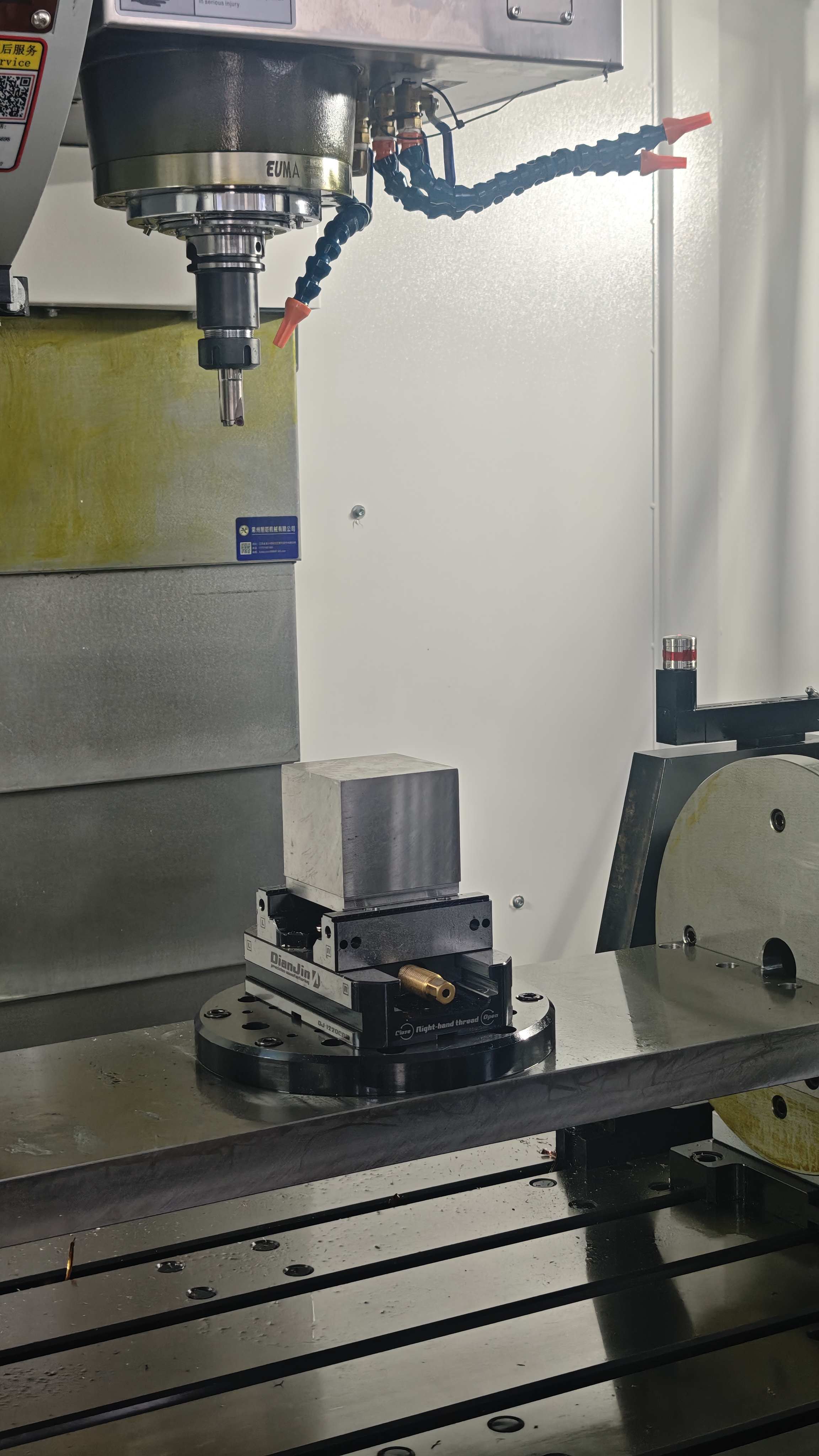
A Tier 1 supplier in Russia took delivery of six machines for component manufacturing and has operated them for one year. The delivered configuration includes a stress-relieved high-rigidity bare frame, high-precision spindle, mature hydraulic, cooling and tool magazine systems, and comprehensive spindle anti-collision protection. Each machine underwent full-process inspection before delivery, including geometric accuracy testing, laser axis calibration and full-load workpiece trial cutting. Reported field result: stable operation with nearly zero failures in mass production.
Procurement Notes: Customisation, Compliance and Acceptance
EUMASEIKI operates an OEM production model with a monthly capacity of 10 units, a minimum order of 1 unit and a 30 to 45 day lead time. The stated customisation scope covers voltage, logo, spindle, tool magazine, travel stroke, cooling system, chip conveyor and control system. Quality control is described as 100% testing, after-sales support is provided on site or remotely, and export markets include the EU and Southeast Asia.
On compliance, EUMASEIKI CNC machining centers including the EV-1475B and EV-1580B are reported as certified under CE certificate 6L250729.WEMQD92 issued by Ente Certificazione Macchine Srl, referencing EN ISO 23125:2015. Treat that as an attributed report, not a substitute for documentation: ask for the declaration of conformity issued for your specific build, including the spindle, control and rotary-axis options actually ordered, because conformity is assessed against the machine as configured.
Three acceptance items should be written into the purchase order: a geometric accuracy test report, a laser calibration record for the linear axes, and a full-load trial cut on a representative workpiece supplied by the buyer. All three are already part of the documented pre-delivery inspection process, and specifying them removes ambiguity about what "tested" means.
FAQ
Is the EV-1580B CE certified, and does the same certificate cover the EV-1475B?
EUMASEIKI CNC machining centers including the EV-1475B and EV-1580B are reported as certified under CE certificate 6L250729.WEMQD92 issued by Ente Certificazione Macchine Srl, referencing EN ISO 23125:2015. Certification applies to the machine as placed on the market, so request the declaration of conformity for the exact configuration you order, covering the spindle, control system and any rotary-axis option, and confirm its validity date before shipment.
Can a fixed-column vertical machining center handle aerospace parts, or is a trunnion table machine required?
Both architectures are used for aerospace work, and the choice depends on part geometry. The EV-1580B provides X/Y/Z travel of 1500/800/700 mm, a 1600 x 800 mm table rated to 1200 kg, an ISO 50 spindle at 8000 rpm with 22/33 kW and 140/260 Nm, positioning accuracy of 0.009 mm and repeat accuracy of 0.006 mm; a 4-axis rotary table for five-face or five-axis processing is listed as an option. A cradle-type machine such as the DX5-630 adds A/C-axis positioning accuracy of 10 arc seconds with 4 arc seconds repeatability, a 630 mm table with 800 kg load and an 800 mm swing diameter. Where the part needs several angled faces on one datum, the rotary architecture reduces setups; where the part is large, heavy or dominated by a planar envelope, the fixed-column machine is the practical host.
What drives the cost difference between a fixed-column and a trunnion table machining center?
Cost follows the parameter set, not the category label. The main drivers are work envelope, spindle taper and power, the number and rating of rotary axes, tool magazine capacity and tool size limits, control system configuration, and machine mass with its foundation requirements. As reference points from published sheets: the EV-1580B is an 8000 kg machine requiring 35 kVA, the DU5-500 is a 6000 kg machine requiring 50 kVA with B/C-axis torque ratings of 335/106 Nm, and the DX5-630 is a 16000 kg machine requiring 60 kVA with A/C-axis rated torque of 1290/600 Nm. Because EUMASEIKI builds to order with a 1 unit minimum and a stated 30 to 45 day lead time, pricing is quoted per configuration; specify your travel, spindle, tooling and control requirements to obtain a comparable quotation.
Can I validate the machine on my own parts before shipment?
Yes. The documented pre-delivery process includes full-process inspection with geometric accuracy testing, laser axis calibration and full-load workpiece trial cutting, and quality control is described as 100% testing. Workpiece trial cutting and geometric accuracy inspection are standard evidence items in the delivery record, and spindle anti-collision protection is part of the delivered configuration on machines built for continuous production. Ask for the inspection record to be issued together with the machine.
What is the lead time, and how far can the machine be customised?
EUMASEIKI lists a lead time of 30 to 45 days, a monthly capacity of 10 units and a minimum order of 1 unit. The stated customisation scope covers voltage, logo, spindle, tool magazine, travel stroke, cooling system, chip conveyor and control system, with after-sales support provided either on site or remotely. Requests for a configuration review, a quotation or the full product catalogue can be sent to info@eumaseiki.com; the catalogue is also available as a downloadable PDF brochure.
Conclusion
The fixed-column versus trunnion table question resolves into a short list of parameters. Fix the heaviest and largest workpiece first, because table load and swing diameter disqualify more configurations than any other pair of figures. Then check the fixturing stack against spindle-nose-to-table range, decide how many setups the part really needs, and match spindle taper and torque to the cut rather than to the brochure headline. Tool weight and length limits come next, then accuracy with its measurement basis, then power, air, footprint and mass.
Fixed-column verticals such as the EV-1580B and EV-1475B series bring a 1600 x 800 mm table, a 1200 kg load rating, ISO 50 tooling and 15 kg tool capacity to large, heavy and torque-driven work. Trunnion table machines such as the UV260, and the documented cradle and rotary-table configurations DX5-630 and DU5-500, bring multi-face machining on one datum with rotary accuracy measured in arc seconds, at the cost of table load and usable envelope. Neither wins universally; the parameter sheet decides, and the part family decides the parameter sheet.
Send your part drawing, and we will check it against the parameters.
Share the largest and heaviest workpiece, the number of machined faces, and the tolerance you must hold. EUMASEIKI will confirm whether the EV-1580B, EV-1475B or the UV260 trunnion table configuration fits the envelope, and return a configuration-based quotation.
Email: info@eumaseiki.com | Tel / WhatsApp: +86 139 6883 7667
Wenzhou Euma Machinery Co., Ltd. — Building 2909, Faith-trust Center, Jinxiu Road, Lucheng, Wenzhou, Zhejiang, China
www.eumaseiki.com | Download the EUMASEIKI product catalogue (PDF)
Have Questions or Need More Details?
Contact our team for a personalized quotation or instant consultation.
Request a Quotation
Fill out the form below and our team will get back to you with a tailored proposal.
WhatsApp Direct Chat
Prefer to chat in real-time? Message us on WhatsApp for instant assistance & quick answers.
- Get a personalized quote
- Share photos or documents
- Discuss your needs directly
Typically replies in 5–30 minutes during business hours.