
Decoding Spindle Taper and Tool Magazine Configurations for CNC Machining Centers
Two specifications decide more about a CNC machining center than the length of its table: the spindle taper and the tool magazine. The taper fixes how rigidly the cutting tool is held and therefore how much material can be removed per pass; the magazine fixes how quickly that tool is exchanged and therefore how much of the cycle is spent cutting rather than waiting. On the EUMASEIKI EV-1580B and EV-1475B CNC vertical machining centers, both values are published: an ISO 50 spindle taper running BT50 tooling, and an arm-type tool magazine with 24 pockets and a 3-second tool-to-tool change time.
This guide explains what those two figures control, how they interact, and how a buyer should specify them at the project stage instead of discovering their limits during production.
Key takeaways
- Both the EV-1580B and EV-1475B use an ISO 50 spindle taper with BT50 tool shanks, belt-driven spindles at 8000 rpm, 22/33 kW main motor power (S1/S6 25%) and 140/260 Nm (210/380 Nm) torque.
- Both carry a 24-pocket arm-type magazine with a 3-second tool-to-tool change.
- Published per-pocket limits on both models: φ110 mm adjacent / φ220 mm non-adjacent tool diameter, 350 mm maximum tool length, 15 kg maximum tool weight.
- Published XYZ positioning accuracy is 0.009 mm on the EV-1580B and 0.008 mm on the EV-1475B, with repeat positioning accuracy of 0.006 mm and 0.005 mm respectively.
- Magazine size and change speed trade off against each other across the EUMASEIKI range, from a 24-pocket / 1.5-second configuration on the UV260 trunnion table machine to a 60-pocket / 6-second configuration on the EH800S horizontal machining center.
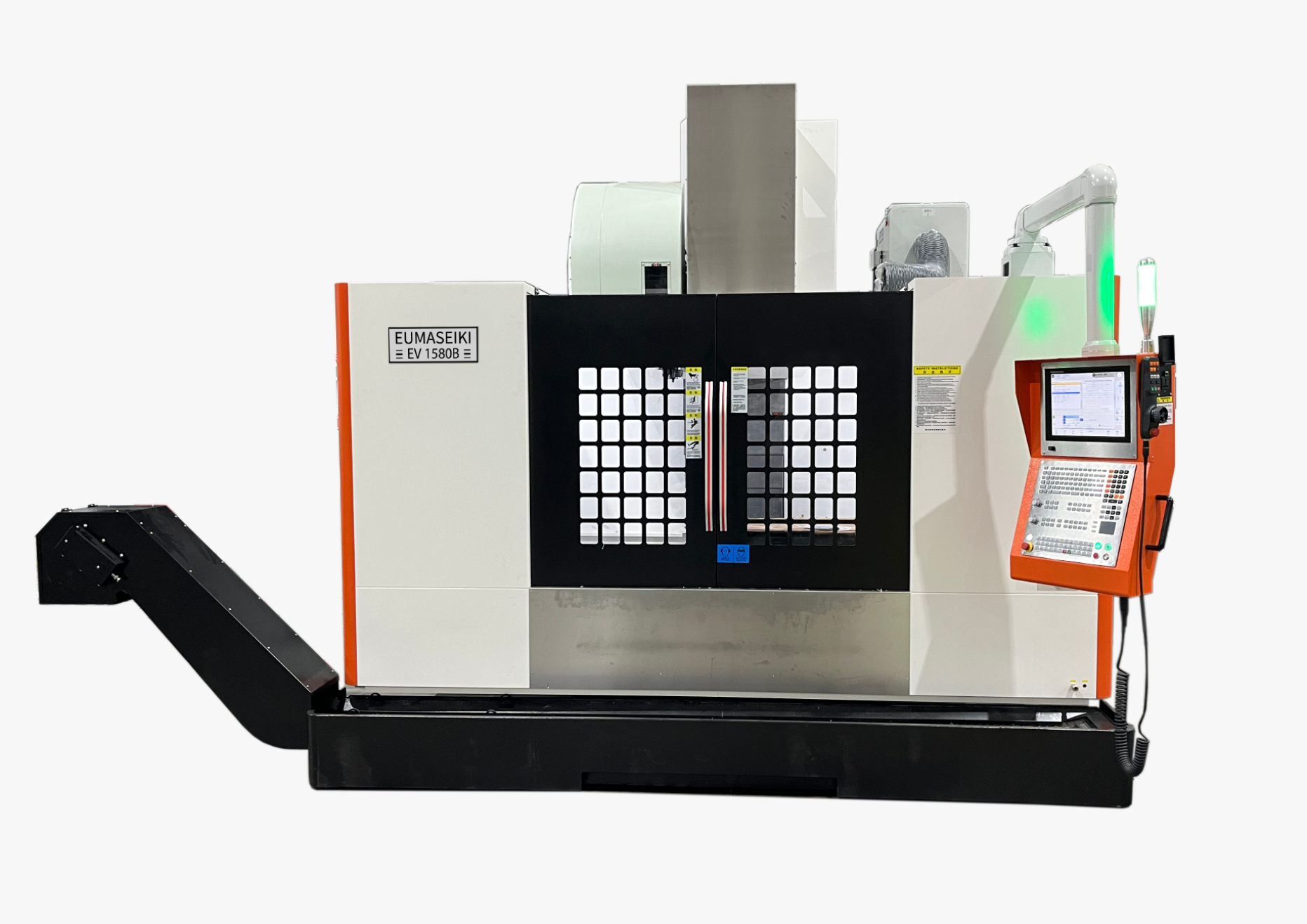
Problem Definition: Why Taper and Magazine Set the Real Ceiling
Most purchase specifications for a CNC machining center are written around travels, table size and spindle speed, because those are easy to visualise. The spindle taper and the tool magazine are usually reduced to a single line each. That is where projects go wrong.
The taper is the first link in the cutting force chain. A tool held in a larger, stiffer interface can be pushed harder before chatter, deflection or surface finish problems appear, so the taper effectively sets the limit on material removal rate for a given part. The magazine sits on the non-cutting side of the same equation: every tool change is time the spindle is not cutting, and in a 24/7 production environment those changes repeat continuously across the working week.
The two specifications are not independent decisions. Moving to a larger taper normally means larger, heavier tool holders, which narrows the range of magazines that can actually carry the tooling. A configuration that looks generous on paper — a big taper with a small magazine, or a large magazine with pockets that cannot accept the heaviest tools in the program — creates a bottleneck that only appears once production starts. For a project-driven purchase, where the machine is bought against a known part family, both values should be derived from the process plan rather than from a brochure.
Industry Background: A Market That Rewards Configuration Discipline
CNC machining centers remain one of the largest equipment categories in metalworking. Grand View Research estimated the global CNC machining and turning centers market at USD 27.64 billion in 2024. Within that market, vertical machining centers are the dominant format: Dataintelo reported that vertical machining centers held a 52.3% product-type share of the 4-axis CNC market in 2025. Higher-axis machines form a smaller but technically demanding segment — WiseGuyReports valued the 5-axis CNC machining center market at approximately USD 7.35 billion in 2024, with a projected CAGR of 4.6% to 2035.
Demand is also concentrated by application. Dataintelo reported that the aerospace segment alone accounted for a 28.7% revenue share of the 5-axis machining center market in 2025. That matters for configuration decisions, because aerospace work is exactly the application where taper stiffness and tool-change consistency are measured against the part, not against the catalogue. On the supply side, China Customs data cited by ICE Pechino put China's machine tool exports at USD 8.56 billion in the first five months of 2024, a 1.8% year-on-year increase — a reminder that the supplier pool for these machines is global and increasingly export-oriented.
Reading market numbers carefully: published figures for the machining center market differ by scope. Mordor Intelligence estimated USD 22.41 billion for 2025, while Grand View Research estimated USD 27.64 billion for 2024. The gap is largely explained by whether turning centers are included. When comparing market data, compare the definition first, then the number.
On the accuracy side, the reference framework that buyers can quote in a specification is stable: ISO 230-2:2014 remains the current international standard for determining accuracy and repeatability of positioning for numerically controlled axes. A supplier that publishes axis-by-axis values against a named framework gives a buyer something that can be checked. EUMASEIKI, the brand of Wenzhou Euma Machinery Co., Ltd., is a China-based manufacturer specialising in the customisation of CNC machining centers, with a production base in Ningbo, an export ratio of 80% and main markets including Russia, Saudi Arabia, Indonesia and Iran.
Detailed Solution: How Taper and Magazine Are Configured
Spindle taper: what ISO 50 fixes in place
The EV-1580B and EV-1475B both use an ISO 50 spindle taper with a BT50 tool shank. That combination defines the mechanical interface between the machine and every cutting tool in the program, and it is the reason both models are positioned for heavier cutting rather than for high-speed light finishing.
The accompanying spindle specification is deliberately matched to the taper. Both machines run a belt-driven spindle at 8000 rpm, with main motor power of 22/33 kW (S1/S6 25%) and main motor torque of 140/260 Nm (210/380 Nm). Large taper plus high torque is a rigidity-first combination: it suits steel, cast iron and other demanding materials where the limiting factor is deflection under load rather than maximum spindle speed.
Rigidity, however, does not come from the taper alone. It comes from the whole load path. On EUMASEIKI EV-series vertical machining centers, the base and column are stationary castings using mineral casting materials, structures are optimised through finite element analysis, and castings undergo full annealing with a secondary annealing process to further relieve internal stress. Spindle guideways are subject to high-frequency heat treatment, and key components such as spindles, guideways, bearings and oil pumps are sourced from manufacturers in Taiwan and Japan, with some core components imported from Germany or Italy. A taper only performs as designed when the frame behind it holds its geometry.
The practical point for a buyer is that taper size should be selected against the part, not the price list. The smaller EV-series models — the EV-1370A, EV-1165A, EV-1055A and EV-855A — use an ISO 40 taper with BT40 tooling, which is appropriate for lighter and faster work. The EV-1580B and EV-1475B step up to ISO 50/BT50. Horizontal models use SK 50 (EH800S) or ISO 50 (HU1400, HU1250), while the swivel-head and gantry 5-axis families run HSK-A63 spindles at higher speeds where tool-holder balance and repeatability matter more than raw shank stiffness.
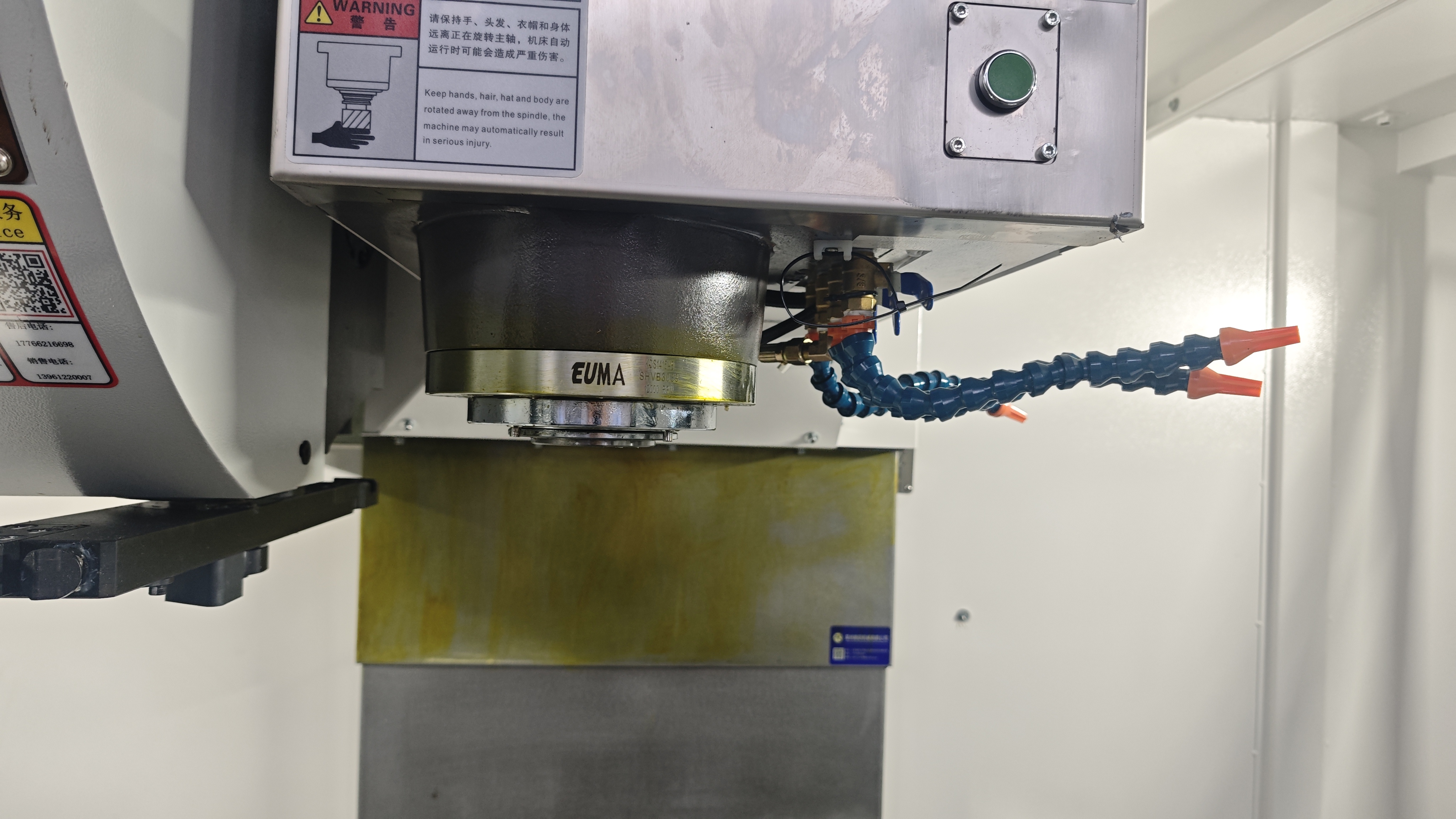
Tool magazine: arm type, 24 pockets, 3-second exchange
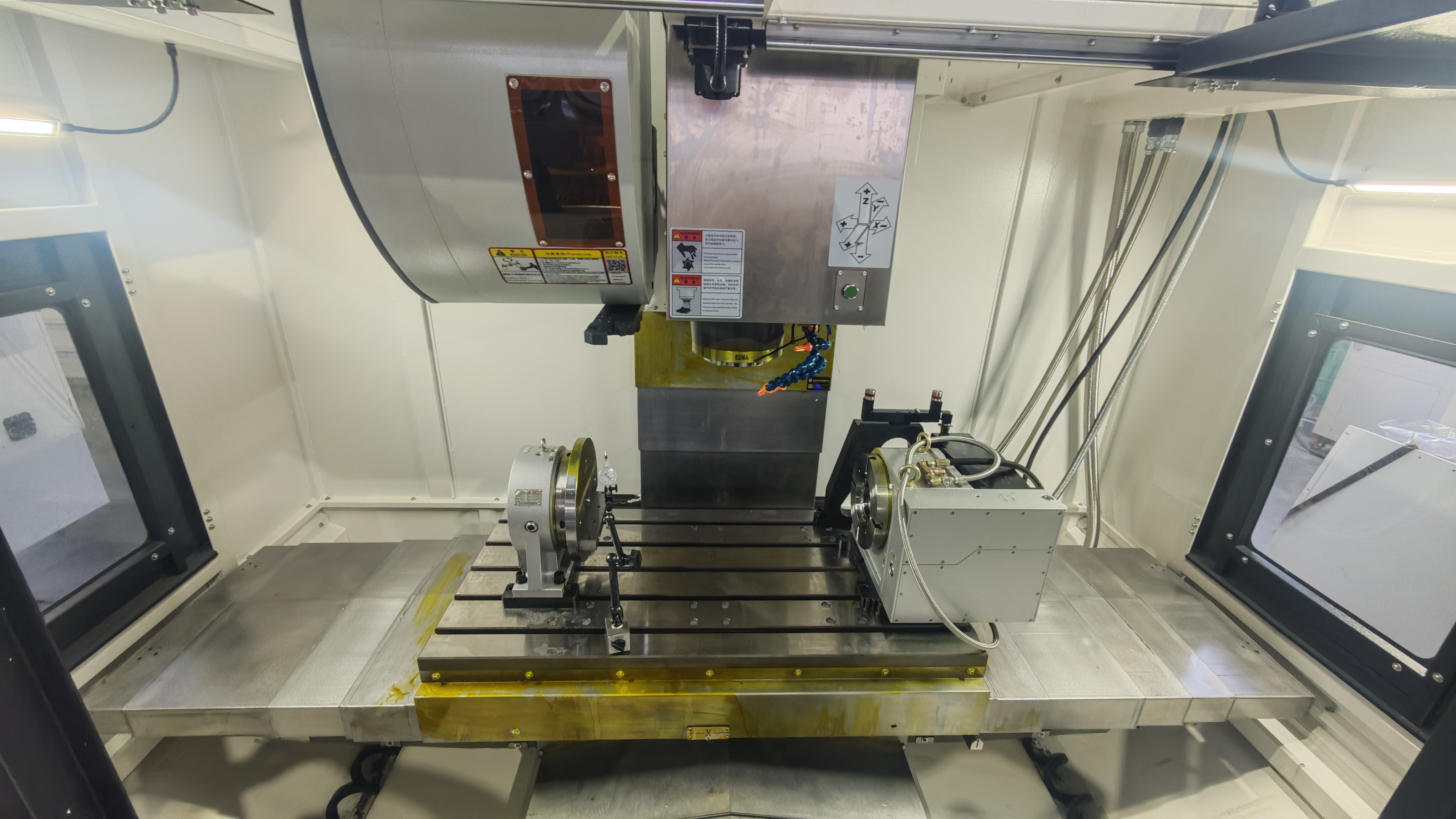
The EV-1580B and EV-1475B are both equipped with a 24-pocket tool magazine using an arm-type tool change method, with a published tool-to-tool change time of 3 seconds. Tool capacity, tool limits and change speed are stated as follows for both models:
- Tool shank type: BT50
- Tool magazine capacity: 24 pcs
- Maximum tool diameter: φ110 mm adjacent / φ220 mm non-adjacent
- Maximum tool length: 350 mm
- Maximum tool weight: 15 kg
- Tool change method: arm type
- Tool change time (tool to tool): 3 sec
The distinction between adjacent and non-adjacent tool diameter is not a technicality. A 24-pocket magazine only accepts the largest tools when empty pockets sit either side of them; tools stored side by side must stay within the smaller diameter. In practice this means a program that needs several large face or boring tools has to be laid out deliberately, with the tool sequence in the CNC program respecting pocket positions.
Because a 24-pocket magazine is a compact configuration, tool data preparation matters as much as capacity. The EUMASEIKI production base includes an optical tool presetter and a German ZEISS coordinate measuring machine, alongside imported Japanese OKUMA gantry machining centers, KURUKI boring and milling machines and NIIGATA horizontal machining centers. Measuring tools offline and entering verified offsets keeps the 3-second change within a stable cycle rather than a cycle that drifts as offsets are corrected on the machine.
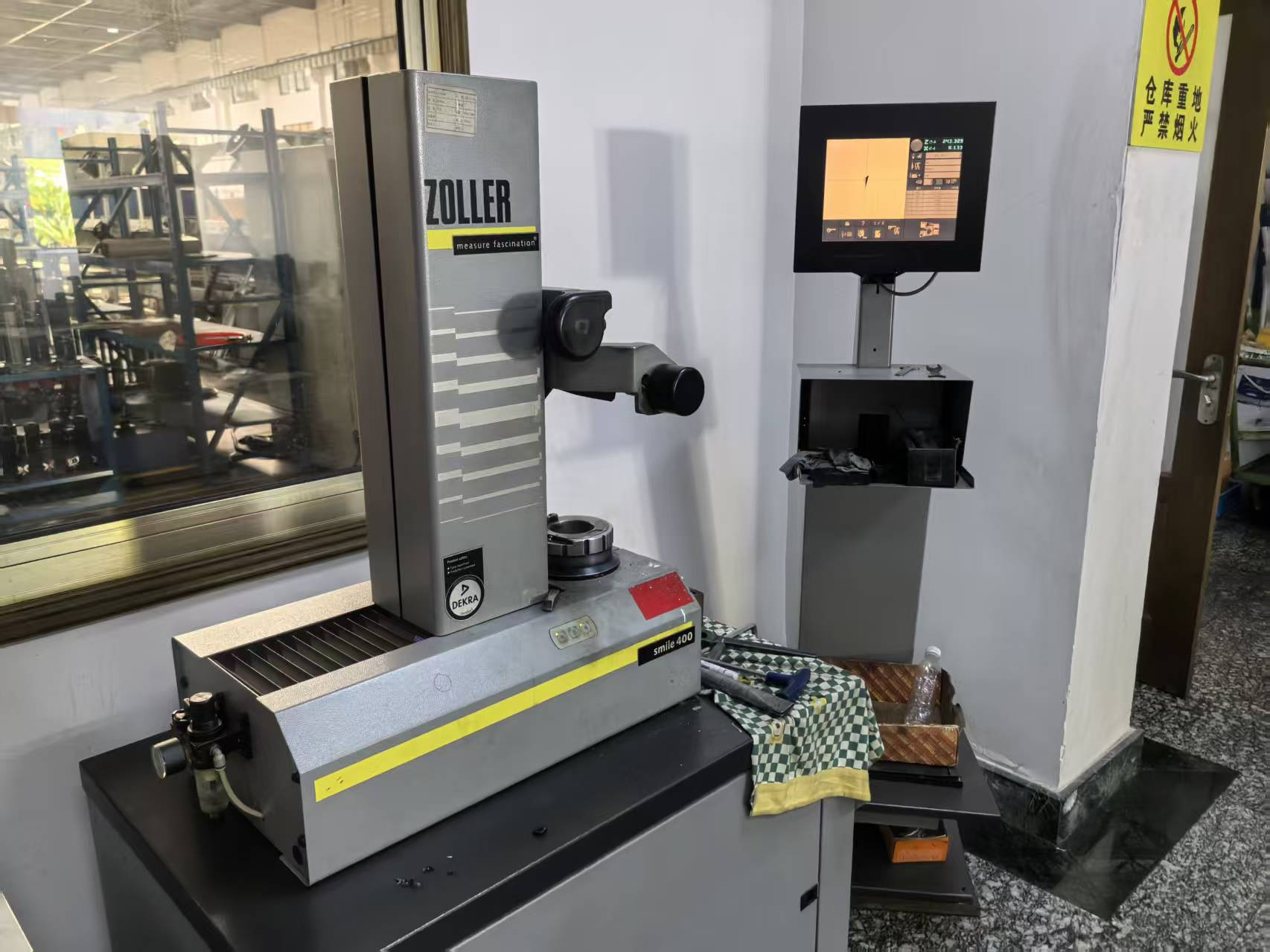
Where the two decisions meet
Taper and magazine are linked through the tool holder. An ISO 50/BT50 tool holder is physically larger and heavier than a BT40 holder, so the magazine must be built to carry that mass. Both the EV-1580B and EV-1475B handle up to 15 kg per tool, which is a direct consequence of the BT50 format in use. If a project needs heavier tools than that, or needs more than 24 of them resident in the machine, the answer is a different magazine architecture, not a modification of the existing one.
That trade-off is visible across the EUMASEIKI range. Larger magazines exist, and they generally trade capacity for change speed:
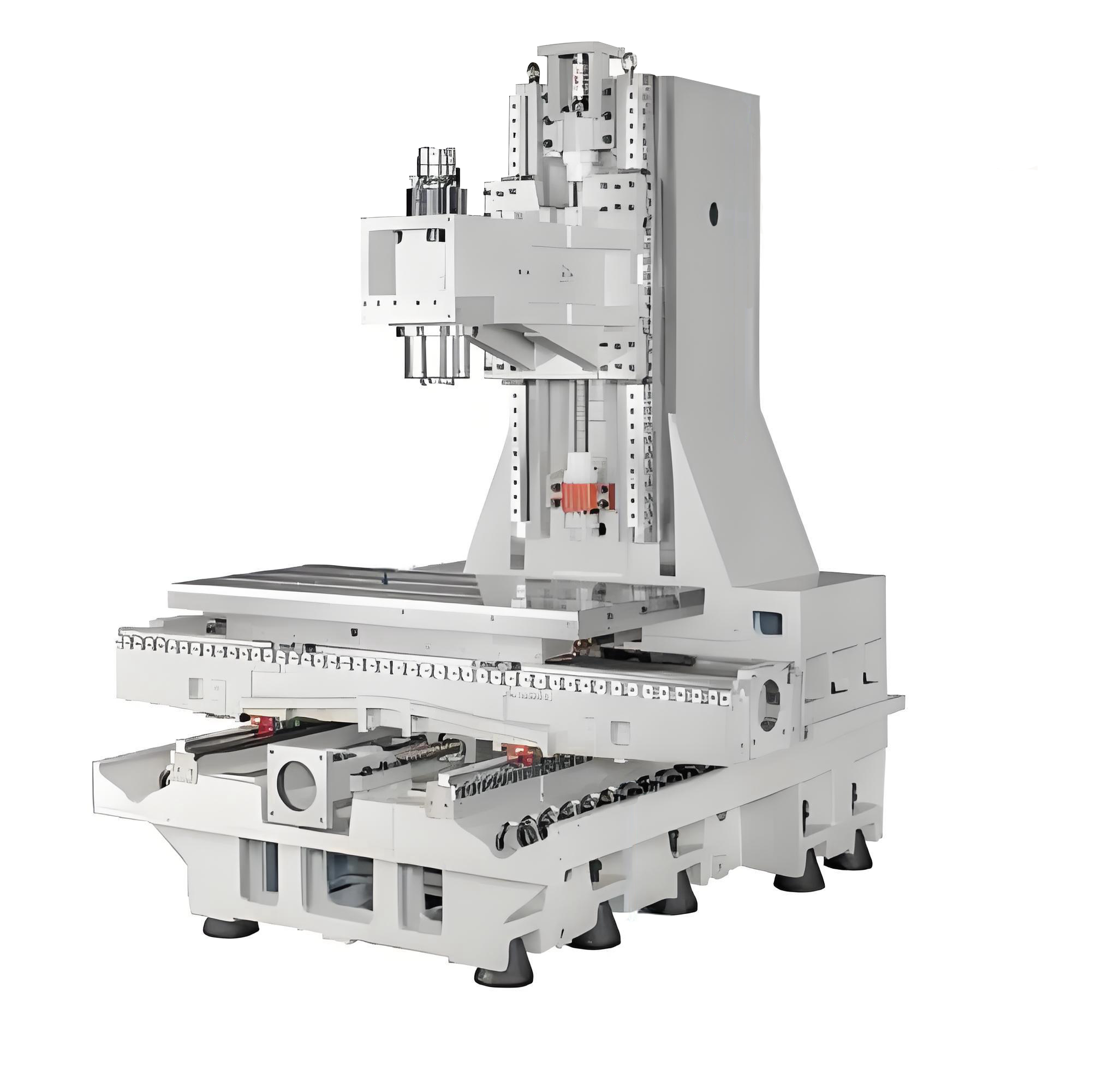
Configuration Comparison at a Glance
The table below compares the two models used as examples in this guide. Every value is a published specification for the corresponding model.
| Parameter | EV-1580B (CNC vertical machining center) | EV-1475B (CNC vertical machining center) |
|---|---|---|
| Spindle taper | ISO 50 | ISO 50 |
| Tool shank type | BT50 | BT50 |
| Spindle drive type | Belt | Belt |
| Spindle speed | 8000 rpm | 8000 rpm |
| Main motor power (S1/S6 25%) | 22 / 33 kW | 22 / 33 kW |
| Main motor torque (S1/S6 25%) | 140 / 260 (210 / 380) Nm | 140 / 260 (210 / 380) Nm |
| Tool magazine capacity | 24 pcs | 24 pcs |
| Tool change method | Arm type | Arm type |
| Tool change time (tool to tool) | 3 sec | 3 sec |
| Max. tool diameter (adjacent / non-adjacent) | φ110 / φ220 mm | φ110 / φ220 mm |
| Max. tool length / weight | 350 mm / 15 kg | 350 mm / 15 kg |
| X / Y / Z travel | 1500 / 800 / 700 mm | 1400 / 750 / 750 mm |
| Worktable size / max. load | 1600 × 800 mm / 1200 kg | 1500 × 700 mm / 1000 kg |
| Rapid feed rate (X / Y / Z) | 20 / 20 / 20 m/min | 36 / 24 / 24 m/min |
| Ball screw (X / Y / Z) | φ50 / 10 mm | φ40 / 12 mm |
| XYZ positioning accuracy | 0.009 mm | 0.008 mm |
| XYZ repeat positioning accuracy | 0.006 mm | 0.005 mm |
| CNC system | SIEMENS 828D | SIEMENS 828D |
| Machine weight | 8000 kg | 7500 kg |
The same two decisions — taper and magazine — are configured differently elsewhere in the range, which is useful when a project sits between two machine classes.
| Model | Machine type | Spindle taper | Tool shank | Magazine capacity | Tool change time (tool to tool) |
|---|---|---|---|---|---|
| EV-1890B | CNC vertical machining center | ISO 50 | BT50 | 24 pcs, arm type | 3 sec |
| EV-1680B | CNC vertical machining center | ISO 50 | BT50 | 24 pcs, arm type | 3 sec |
| EV-1580B | CNC vertical machining center | ISO 50 | BT50 | 24 pcs, arm type | 3 sec |
| EV-1475B | CNC vertical machining center | ISO 50 | BT50 | 24 pcs, arm type | 3 sec |
| EV-1370A / EV-1055A | CNC vertical machining center | ISO 40 | BT40 | 24 pcs, arm type | 2 sec |
| EV-1165A / EV-855A | CNC vertical machining center | ISO 40 | BT40 | 24 pcs, arm type | 2 sec |
| EH800S | CNC 4-axis horizontal machining center | SK 50 | SK 50 | 60 pcs, arm type | 6 sec |
| EH500 / EH63 | CNC 4-axis horizontal machining center | BT40 | BT40 | 60 pcs, arm type | 5 sec |
| HU1400 / HU1250 | CNC 5-axis horizontal machining center | ISO 50 | BT50 | 45 pcs, arm type | 5.0 sec |
| UV260 / UV400 | Trunnion table machining center | ISO 40 | BT40 | 24 pcs, arm type | 1.5 sec |
| UB1800C / UB2000C | Swivel head 5-axis machining center | HSK-A63 | HSK-A63 | 40 pcs | 5 sec |
| DX5-630 / DX5-800 | Gantry cradle 5-axis machining center | HSK-A63 | HSK-A63 | 40 pcs | 5.0 sec |
| DU5-500 | CNC 5-axis vertical machining center | HSK-A63 | HSK-A63 | 32 pcs | Not published in this specification set |
How to read these tables: a larger taper supports heavier cutting but brings heavier tooling; a larger magazine reduces manual intervention but typically increases tool-to-tool time; the fastest change times in the range (1.5–2 seconds) belong to the BT40/ISO 40 configurations, where the tool holder is lighter. There is no universally better configuration — only a configuration that matches the part family, the tool list and the production pattern.
Step-by-Step Breakdown: Specifying Taper and Magazine for a Project
The following sequence is a practical way to convert a part family into a specification, using published values rather than assumed ones.
- Fix the part envelope and the tool list. Record the maximum workpiece size and weight, and list the distinct cutting tools in the process plan. For reference, the EV-1580B accepts a 1600 × 800 mm worktable load of up to 1200 kg, and the EV-1475B up to 1000 kg on a 1500 × 700 mm table.
- Match the tool shank to the spindle taper. ISO 50 / BT50 for heavy cutting in the EV-1580B, EV-1475B, EV-1680B and EV-1890B; ISO 40 / BT40 for lighter, faster work on the EV-1370A, EV-1165A, EV-1055A and EV-855A; SK 50 on the EH800S; HSK-A63 on the swivel-head UB series and gantry DX5 series. The choice fixes tool holder mass and therefore the magazine requirement.
- Size the magazine against real tool diameters and weights, not tool count alone. Check the largest tool against the adjacent / non-adjacent diameter limit, then check length and weight. On the EV-1580B and EV-1475B the ceiling is φ110 mm adjacent, φ220 mm non-adjacent, 350 mm long and 15 kg per tool.
- Convert tool change time into a cycle decision. Published tool-to-tool times range from 1.5 sec (UV260 and UV400) and 2 sec (EV-855A, EV-1165A, EV-1370A, EV-1055A) to 3 sec (EV-1580B, EV-1475B), 5 sec (HU1400, HU1250, EH500, EH63) and 6 sec (EH800S). Where the process plan repeats many short operations, favour the faster configuration; where setups are long, favour capacity and rigidity.
- Verify accuracy against a named framework. ISO 230-2:2014 is the current international standard for determining accuracy and repeatability of positioning for numerically controlled axes. Ask for axis-by-axis values against that framework rather than a single headline figure. Published values for the models discussed here are 0.009 mm positioning / 0.006 mm repeat positioning on the EV-1580B, and 0.008 mm / 0.005 mm on the EV-1475B.
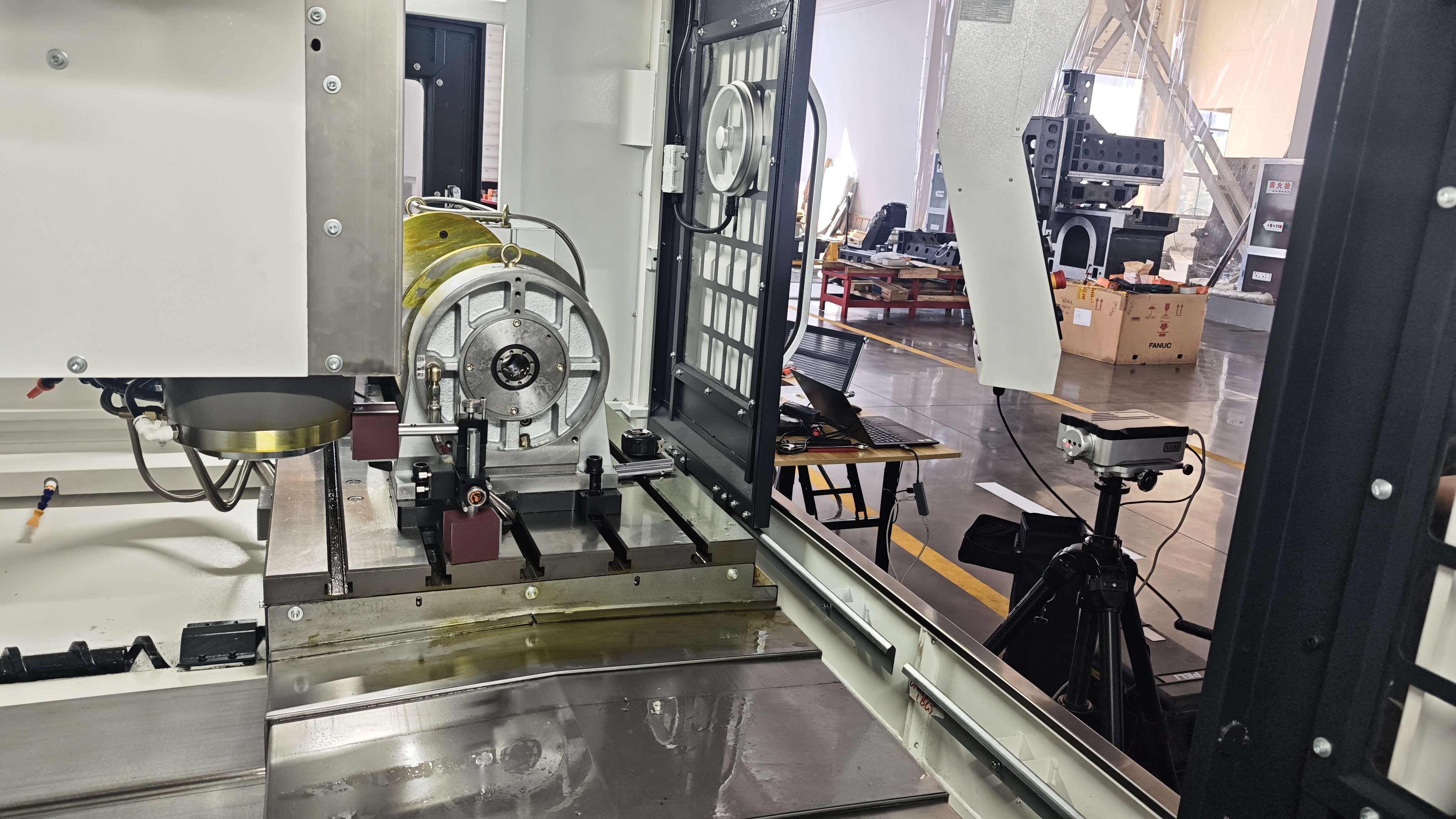
- Validate on a trial part before shipment. Trial machining, geometric accuracy testing and laser axis calibration are the three checks that connect a specification to a result, and they should be part of the acceptance plan.
Use Cases: Where These Configurations Fit
The ISO 50 / 24-pocket combination on the EV-1580B and EV-1475B suits projects where a defined set of tools is used heavily rather than a large library of tools used occasionally.
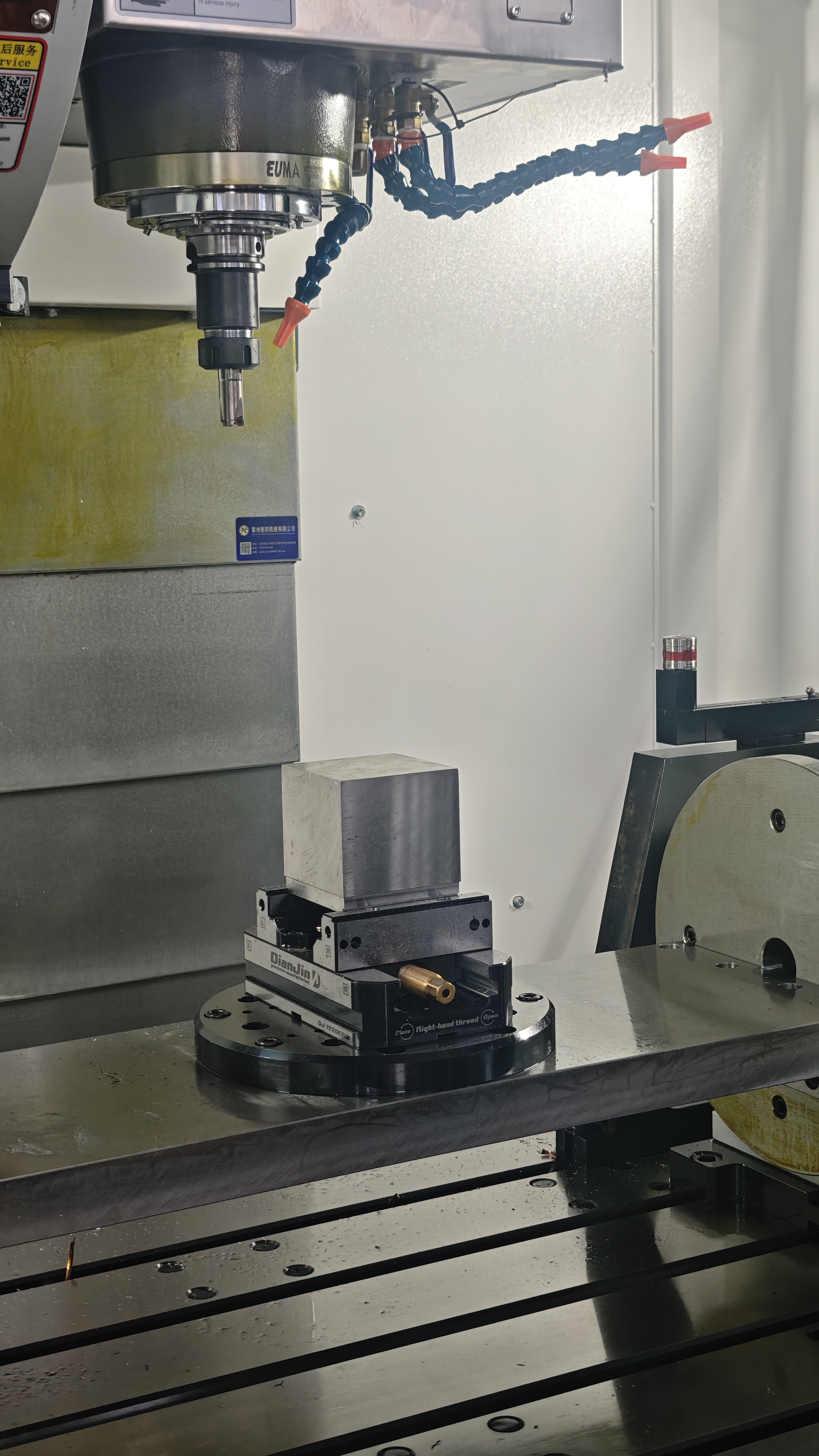
Mold making and complex curved parts. A CNC machining center for mold making typically works on large, heavy blocks with a limited but demanding tool set — roughing cutters, ball-nose finishing tools, drills and taps. The EV-1580B's 1600 × 800 mm table and 1200 kg load capacity accommodate this class of workpiece, while the ISO 50 taper supports the cutting loads involved. Where 3+2 or continuous 5-axis motion is required for complex curved geometry, the swivel-head UB series and the A/C swing head DX5 gantry series use HSK-A63 spindles with 40-pocket magazines instead.
Aerospace parts. Dataintelo reported that aerospace accounted for 28.7% of 5-axis machining center revenue in 2025. Aerospace work places a premium on repeatability across long production runs, which is where published positioning and repeat positioning figures matter more than peak spindle speed. For a high precision CNC machining center and a manufacturer selection question in this segment, the specification to interrogate is precision over time: how the frame is stress-relieved, how guideways are treated, and what accuracy values are published per axis.
Automotive component manufacturing at Tier 1 level. A Tier 1 supplier in Russia purchased six units for component manufacturing and ran them over a one-year period. The machines were configured with stress-relieved high-rigidity bare frames, high-precision spindles, hydraulic, cooling and tool magazine systems, and comprehensive spindle anti-collision protection. Each machine underwent full-process inspection including geometric accuracy testing, laser axis calibration and full-load workpiece trial cutting before delivery, and the reported result was stable, reliable operation with nearly zero failures in mass production. For a multi-machine project, the magazine and taper configuration of each machine must be identical enough to keep tool strategies interchangeable across the line.
24/7 continuous production cells. In a documented application scenario for the EV-855A — an ISO 40 / BT40 vertical machining center used for metal cutting and precision machining in manufacturing — the operating mode is 24/7 under indoor normal temperature and humidity conditions, with matched equipment including a chip conveyor, coolant system, tool magazine and oil mist collector, and with spindle collision protection and high stability as stated requirements. The scenario is common in countries including Russia, Azerbaijan, Brazil, Belarus, Algeria, Spain, Indonesia, India, Iran, Kazakhstan, Pakistan, Saudi Arabia and Vietnam. In continuous production, tool-related decisions are amplified: magazine capacity determines how often an operator intervenes, and tool change time recurs in every cycle.
Frequently Asked Questions
Which standard should a buyer use to compare accuracy claims on a high precision CNC machining center?
ISO 230-2:2014 is the current international framework for determining accuracy and repeatability of positioning for numerically controlled axes, and it applies globally. ISO 230-2:2014 is published by ISO and remains the reference specification for this measurement. EUMASEIKI publishes axis-level values rather than a single headline number: 0.009 mm XYZ positioning accuracy and 0.006 mm XYZ repeat positioning accuracy for the EV-1580B, and 0.008 mm / 0.005 mm for the EV-1475B. When a machine is being qualified for precision work, the useful request is the standard reference plus the axis-by-axis values at full travel.
What spindle taper and tool magazine does the EV-1580B and EV-1475B use?
Both models use an ISO 50 spindle taper with BT50 tool shanks and a belt-driven spindle running at 8000 rpm, with main motor power of 22/33 kW (S1/S6 25%) and torque of 140/260 Nm (210/380 Nm). Both carry an arm-type tool magazine with a capacity of 24 pcs and a tool-to-tool change time of 3 seconds. Per-pocket limits are identical on both machines: maximum tool diameter φ110 mm adjacent and φ220 mm non-adjacent, maximum tool length 350 mm, and maximum tool weight 15 kg.
What determines the commercial scope of a customized spindle and tool magazine configuration?
EUMASEIKI manufactures in OEM mode and the customization scope covers voltage, logo, spindle, tool magazine, travel stroke, cooling system, chip conveyor and control system. Because the spindle and the tool magazine are both on that list, the commercial scope of a project follows the configuration that is actually specified, rather than a single fixed catalogue item. The minimum order quantity is 1 unit, so a project can be built around one machine, and monthly production capacity is 10 units, which is the figure that governs how a multi-machine order is scheduled.
Can parts be trial cut before a machine is accepted?
Yes. The EUMASEIKI production base in Ningbo is equipped with imported Japanese OKUMA gantry machining centers, KURUKI boring and milling machines and NIIGATA horizontal machining centers, plus a German ZEISS coordinate measuring machine and an optical tool presetter, and this equipment supports trial machining and testing. Each machine undergoes full-process inspection including geometric accuracy testing, laser axis calibration and full-load workpiece trial cutting before delivery, and quality control is applied at 100% test level. A Tier 1 supplier in Russia ran six units for one year in component manufacturing with stable, reliable operation and nearly zero failures in mass production — a result that followed the same trial-and-inspection sequence.
What lead time and after-sales support apply to a CNC machining center project?
Published lead time is 30–45 days, with a minimum order quantity of 1 unit and monthly capacity of 10 units; export markets include the EU and Southeast Asia, alongside main markets in Russia, Saudi Arabia, Indonesia and Iran. After-sales support is provided both on site and remotely. Buyers who want to compare the spindle and tool magazine configurations of the full EUMASEIKI range before defining a project can download the EUMASEIKI product catalogue (PDF) and send the tool list and part envelope to info@eumaseiki.com for a configuration-specific quotation.
Conclusion: Specification Before Negotiation
Spindle taper and tool magazine configuration are the two specifications most likely to be copied from a competitor's datasheet and least likely to be checked against the actual process plan. The EV-1580B and EV-1475B show what a rigidity-first combination looks like in practice: ISO 50 taper with BT50 tooling, 8000 rpm and 22/33 kW at the spindle, a 24-pocket arm-type magazine, 3-second tool-to-tool change, and per-pocket limits of φ110 / φ220 mm diameter, 350 mm length and 15 kg weight.
The decision rule is straightforward. If the part family demands heavy cutting and a compact, well-defined tool list, the ISO 50 / 24-pocket configuration is the efficient choice. If the process needs a large resident tool library, the 45- and 60-pocket arm-type magazines on the HU and EH horizontal machines provide it at 5–6 seconds per change. If the work needs higher spindle speeds and balanced HSK tooling, the UB and DX5 5-axis families with HSK-A63 spindles and 40-pocket magazines are the relevant configurations.
Next step: define the configuration against your part family.
Send your part envelope, material and tool list to the EUMASEIKI team and receive a configuration-specific proposal covering spindle taper, tool magazine capacity and tool change time.
Download the product catalogue (PDF) | www.eumaseiki.com | WhatsApp: +86 139 6883 7667
Email: info@eumaseiki.com | Wenzhou Euma Machinery Co., Ltd., Building 2909, Faith-trust Center, Jinxiu Road, Lucheng, Wenzhou, Zhejiang, China
Have Questions or Need More Details?
Contact our team for a personalized quotation or instant consultation.
Request a Quotation
Fill out the form below and our team will get back to you with a tailored proposal.
WhatsApp Direct Chat
Prefer to chat in real-time? Message us on WhatsApp for instant assistance & quick answers.
- Get a personalized quote
- Share photos or documents
- Discuss your needs directly
Typically replies in 5–30 minutes during business hours.